Hello fellow riders, this is the second of a series of ongoing blogs that relate to the goal of enjoying a safe ride using the strategy of Lane Position Optimization (LPO). If you’re new to this series, then you’ll want to read the blogs and watch the videos in the correct order. If this is the first blog you’ve come across, please read and watch the first in the series, Lane Position Optimization 1: Strategy Overview before reading and watching this blog and video and the subsequent ones. Each one will be numbered so it’ll be easy to read and watch them in the correct order.
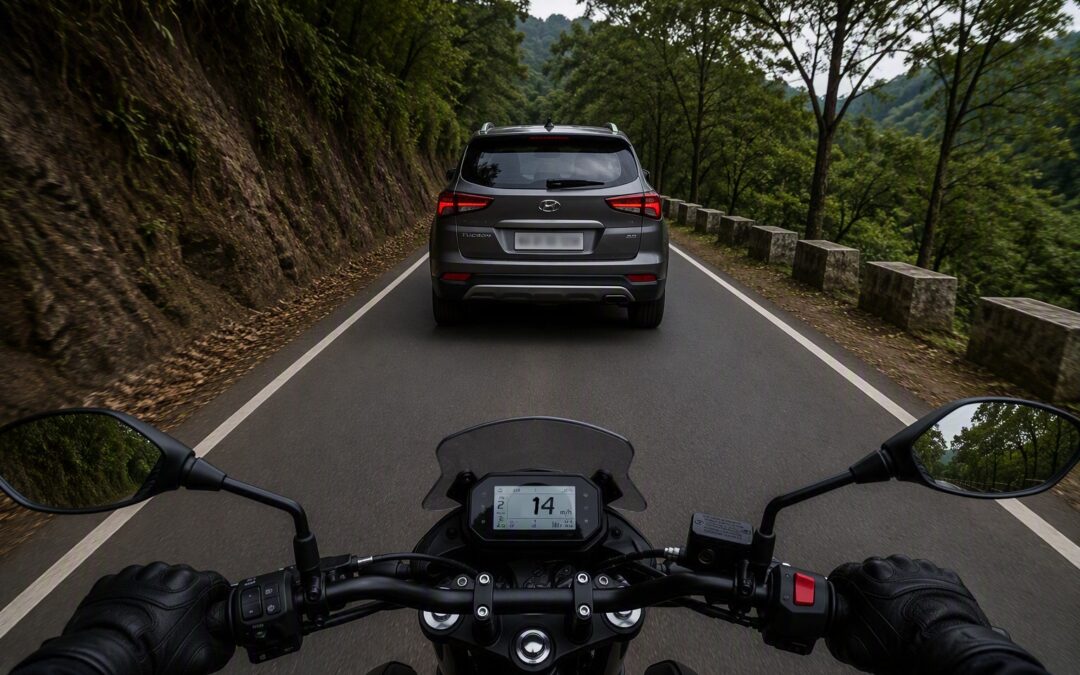
Motorcycles are single track vehicles with a very small footprint, especially in width, which means there are numerous lateral (sideways) positions within the lane or overall roadway in which we can ride. We primarily adjust our sideways positioning with our handlebars by steering or countersteering depending upon speed. Bikes are also much shorter than most other vehicles on the roadway, which provides us with more longitudinal (front-to-back) flexibility, the position of which we adjust with our throttle or brakes. The advantage of our bike’s small footprint and the agility with which we can adjust our position on the roadway allows us to have a great deal of flexibility to ride in the optimal position for safety.
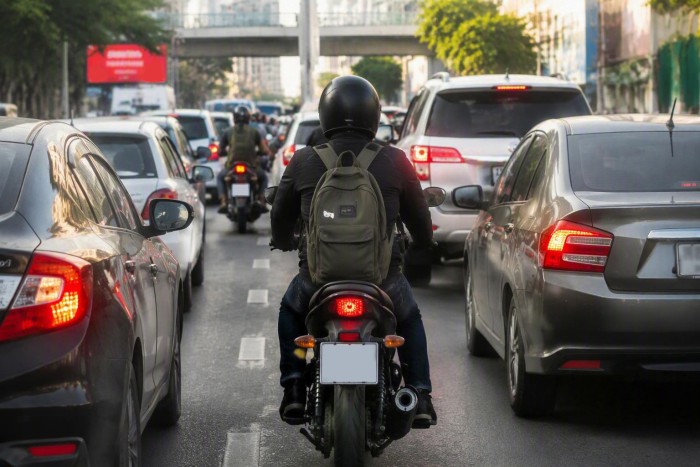
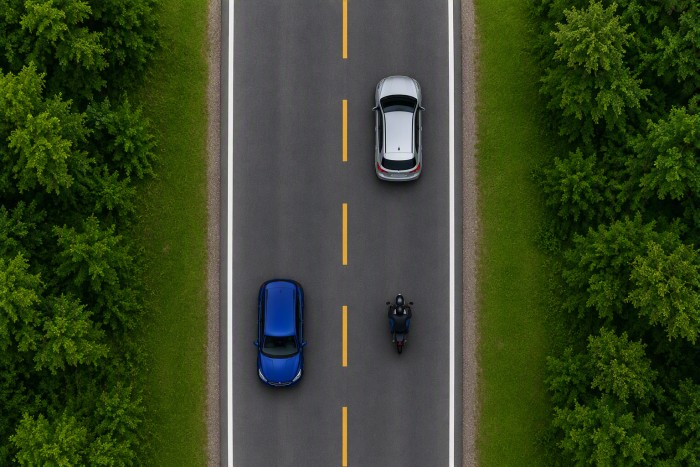
When riding and using the strategy and tactics of Lane Position Optimization, you’ll want to use the absolute best micro-position based on the scenario. However, to make the descriptions of the ideal position easier to understand in the blogs and videos, I’ll reference three primary positions; center, right, and left. The center is exactly as it sounds, meaning you bisect the lane and ride with equal room on your left and right. The right and left positions, however, are more nuanced as they relate to four-wheeled passenger vehicles.
Center of Lane Position
When I refer to the right and left lane positions, I mean where the right and left wheels of cars, SUVs, and up to mid-size pickup trucks are on the roadway. The reason for using these vehicles’ wheel tracks as a measurement is two-fold. The primary reason is that when a four-wheeled vehicle is positioned in the center of the lane, there is still a buffer between the wheels and the edge of the lane. Therefore, when riding our bikes we have this same buffer. This is especially important when turning as bikes get effectively wider as we lean, meaning the side-to-side distance between the bike’s tires on the roadway and our helmets becomes greater the more we lean.
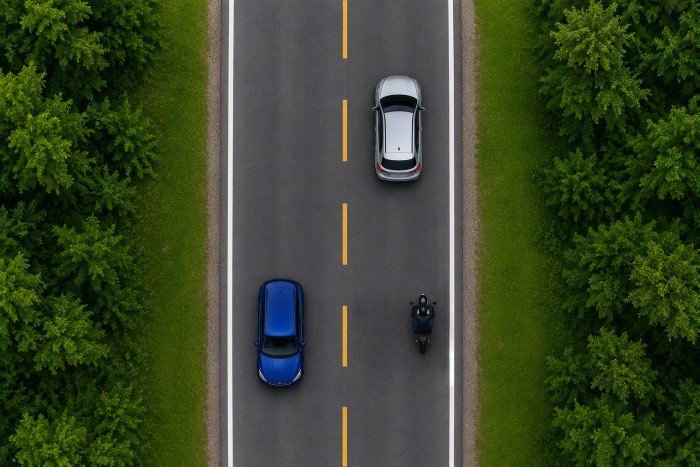
Right of Lane Position
To give a little more detail about using the wheel tracks of four-wheeled passenger vehicles as a measurement, the standard highway lane width is 12 feet, with urban streets being between 10-11 feet, and residential streets between 9-10 feet. The approximate width of passenger cars, SUVs and mid-size pick-up trucks is between six and seven feet. So, depending upon which type of vehicle and roadway you’re considering, you’ll have an average of about two feet between the vehicle’s wheel track and the edge of the lane.
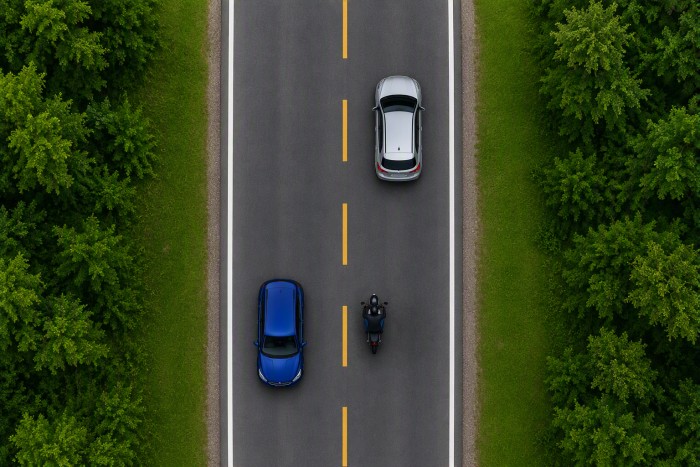
Left of Lane Position
The second reason for using four-wheeled vehicles wheel tracks as a position is that those areas of the roadway tend to be cleaner and dryer. As cars and trucks are much heavier than motorcycles and have much wider tires, that combination tends to scrub the road surface and clear it of debris such as dirt, leaves, snow, etc. The friction of those larger tires also can dry the road surface. The exception to this is when vehicles enter the roadway from off-road and can track mud and dirt on the road surface when they first do so.
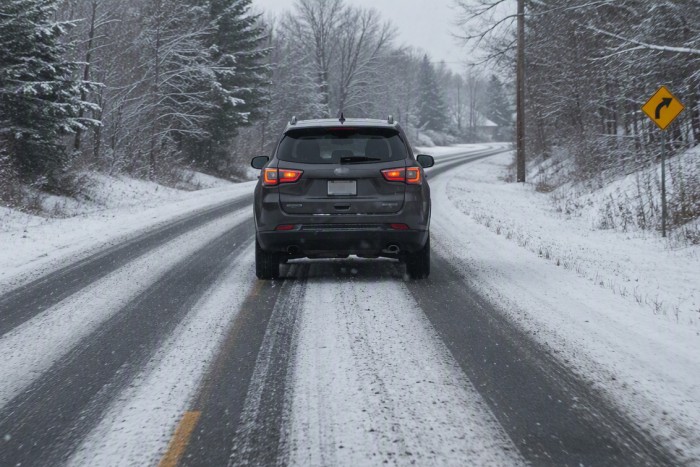
After reading and watching each of these blogs and videos related to Lane Position Optimization, I want you to think about the information provided and put it into practice as you ride. On your next outing, consider how you use the width of your lane and experiment with different positions and what advantages each has in different scenarios. Also pay attention to four-wheeled vehicles and where their tires track on the road surface. Look out for the next blog and video in the series, Lane Position Optimization 3: Positioning to See.