Hello fellow riders, this is the third in a series of ongoing blogs that focus on the goal of enjoying a safe ride using the strategy of Lane Position Optimization (LPO). If you’ve not read and watched the introductory blog and video “Lane Position Optimization 1: Strategy Overview,” and the following blog and video “Lane Position Optimization 2: Lane Positions,” you’ll want to do so before this one. In this blog and related video, we’ll talk about the tactic of Positioning to See, which is to choose the lane position that best allows you to see the roadway ahead, to the sides and behind, and therefore better able to recognize where the road goes and identify any situations you may have to deal with.

A blind turn is where you can’t see all the way through the curve
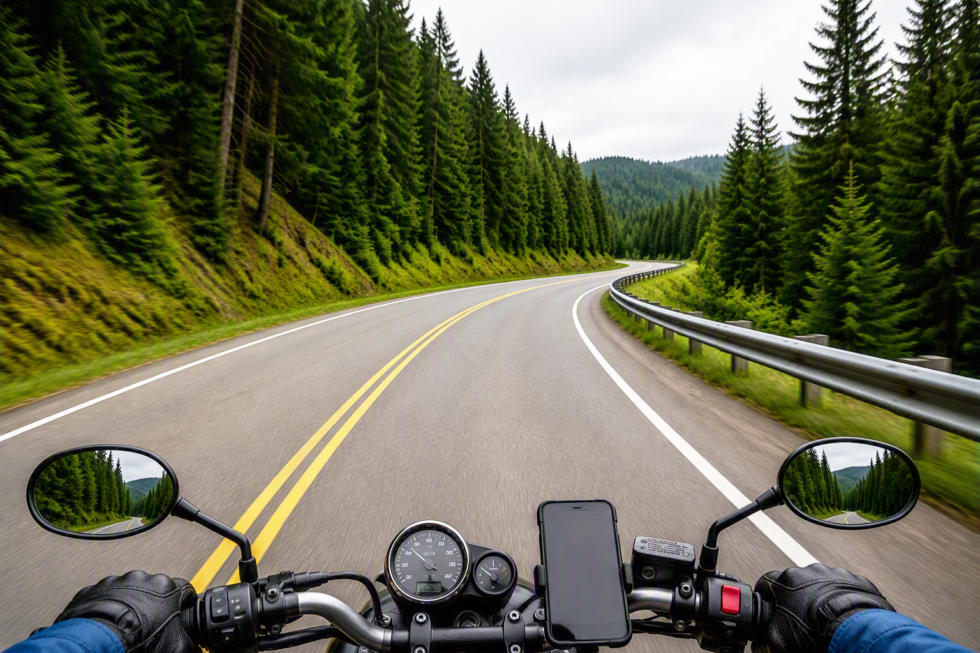
Many if not most of the curves that you’ll ride will be blind, meaning that you’ll not be able to see all the way through the turn. This is because of things like hillsides, trees, buildings, guard rails, vehicles, etc., preventing you from seeing the road ahead. As it takes time to recognize and respond to a situation that requires a change in your current riding status—such as adjusting speed and positioning—the shorter the distance you can see through a turn, the less time you have to make those adjustments. There are two things that you can do to improve this situation: 1) Slow down to give yourself more time and space to respond to issues, and 2) Better positioning yourself to see those issues earlier. We’re going to focus on Positioning to See in this blog, but to provide a good rule of thumb concerning speed, you should only ride as fast as you can effectively deal with an issue ahead.
Properly using the tactic of Positioning to See provides you with extended vision of the roadway ahead but the ideal position depends upon your current riding environment and to a certain extent your knowledge of the road. To start with a simple scenario, let’s say you’re riding on a twisty forest road and you’re coming up to a right-hand curve. Right turns will always be more challenging than lefts as we ride on the right in the U.S. and so those curves will be tighter and the roadway ahead less visible. If you were to hug the inside (right side) of the turn your vision of the roadway head will be extremely limited, as shown in the image below where the rider can’t see the pile of rocks in their lane around the curve. Whereas riding towards the outside will give you a much better view, as shown in the second image where the rider can see the rocks.

Inside of curve lane position doesn’t allow view of rocks to right beyond red vision line

Outside of curve lane position does allow view of rocks to left of red vision line
Another example of Positioning to See is when riding on a busy and congested multi-lane highway or freeway. Especially if you are behind a large vehicle that you can’t see through, such as a box van or SUV with blacked out windows, the position you place yourself in will make a huge difference to how far ahead you can see. If the road is straight, then being in the right or left side of the lane will be best to see the road and two lanes of traffic ahead (if there is an adjacent lane without vehicles, choose to be closer to that lane). If the road curves, position yourself on the side of the lane in the direction of the curve as you’ll see further through the turn between traffic lanes. The center position is not usually good unless you leave a lot of room between you and the vehicle ahead, you’re on a tall bike, and the vehicle ahead is small so you can see over it or you can see through the windows.

Center lane position allows very little view of roadway ahead

Left lane position allows much greater view of roadway ahead
When it comes to all tactics of Lane Position Optimization, you’ll want to be fluid and change your position as needed depending upon the road environment. In the case of Positioning to See you may move from left to right and back again as the road turns and as you approach different vehicles and conditions. As you ride, think about and practice this tactic to recognize the best place to be on the roadway to see what’s going on ahead, to the sides, and behind (using mirrors and head-checks).