Hello fellow riders, this is the fourth blog and related video in the series describing the strategy of Lane Position Optimization. Each blog and video has the strategy name as the title followed by a sequential number and it’s best to read and watch the content in order. In this blog and related video, we’ll talk about the tactic of Positioning to be Seen, which is to choose the lane position that allows other road users the best opportunity to see you. As we know, if a car driver ever violates your right of way and maybe even hits you, the first thing they’ll say is “I didn’t see you,” so it’s important to be as conspicuous as possible. Certainly, there are other things that can make you more visible on the roadway, such as a brightly colored helmet and riding gear, using your lights appropriately, and sounding your horn to draw attention to yourself, which you should always do. In this blog, however, we’re going to focus on Positioning to be Seen.
Motorcycles are some of the smallest vehicles on the roadway and certainly not as numerous as cars and trucks. Because of this, not only does our smaller physical size make it harder for other road users to see us but they’re probably not looking out for us and don’t register our presence even when they could see us. As such, no matter what you do to make yourself as conspicuous as possible, always think and act as if drivers don’t see you. Another good piece of advice is a phrase you may have seen on semi-trucks, “If you can’t see me, I can’t see you” meaning if you can’t see the driver’s face in their side mirrors, there’s no chance that they can see you. This is a good rule of thumb to consider as we discuss, and you practice that tactic of Positioning to be Seen.
The first example of Positioning to be Seen is on a surface street where you are behind a larger vehicle and there is an intersecting road ahead to the right, where a car is waiting to turn, either right and into your lane or left and across your lane. If you are riding on the left side of your lane, the vehicle ahead of you will prevent the turning driver from seeing you. If that driver is in a hurry and only paying attention to the vehicle ahead of you, they could accelerate quickly into your lane as soon as the vehicle passes them and hit you or cause you to hit them as they drive in front of you. In this scenario, the best option would be to move over to the right of your lane so the turning driver can see you behind the other vehicle. This position also allows you a better view of the situation that may prompt you to flash your lights and sound your horn to get the turning driver’s attention and slow down.
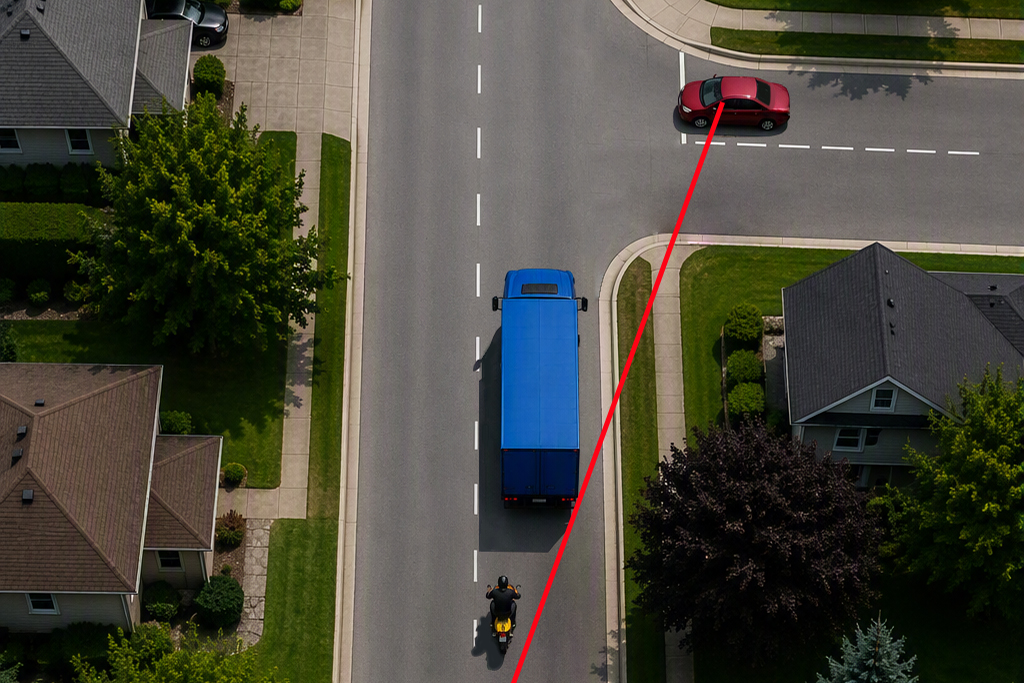
Car driver cannot see the motorcyclist when the rider is in the left lane position
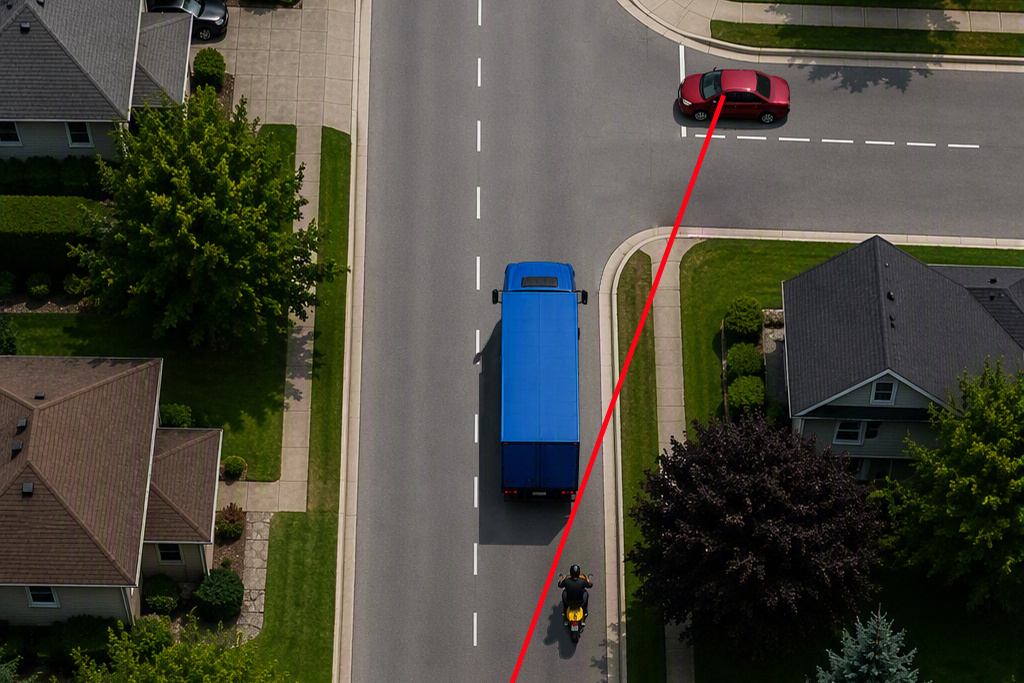
Car driver can see the motorcyclist when the rider is in the right lane position
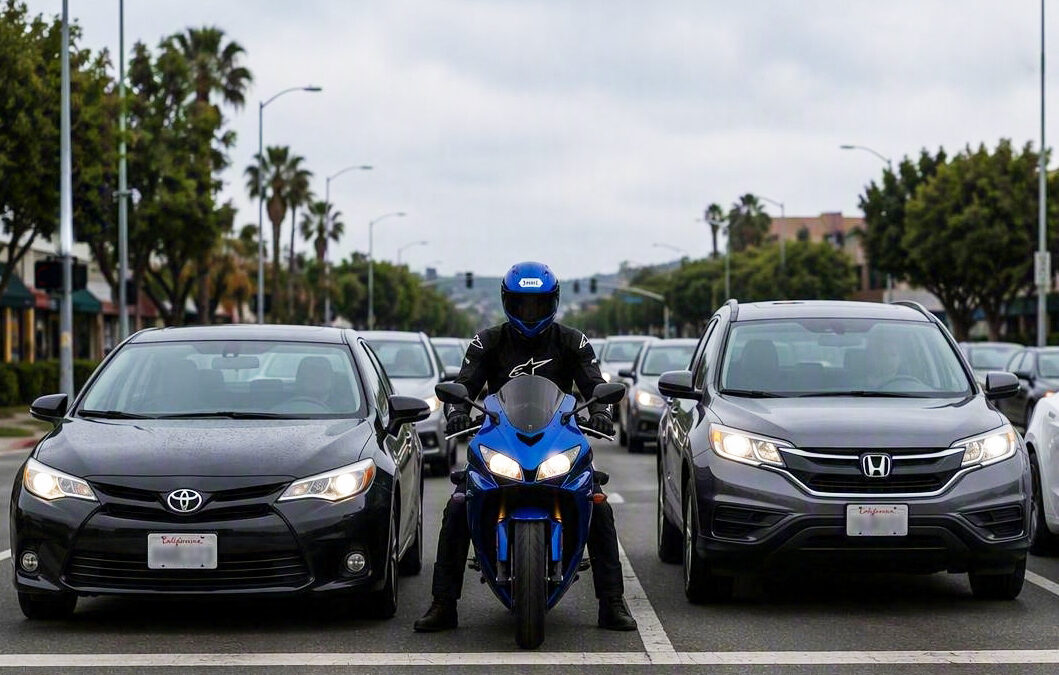
Another scenario where you can use the tactic of Positioning to See is on the freeway in heavy traffic where you’re riding in the carpool or #1 lane, with vehicles all around you. If you were to ride on the left of your lane it makes you harder, if not impossible, to be seen by drivers rearward of the vehicle behind you. This situation is rife for an impatient driver to either quickly overtake the vehicle behind you and back into your lane, or a driver aggressively changing lanes into what they perceive to be a gap in your lane. In both cases the vehicle entering your lane may hit you. The better position, therefore, is to be in the right of the lane so you can be better seen by other road users. Also, you have an escape area to the left as well as ahead by splitting lanes.
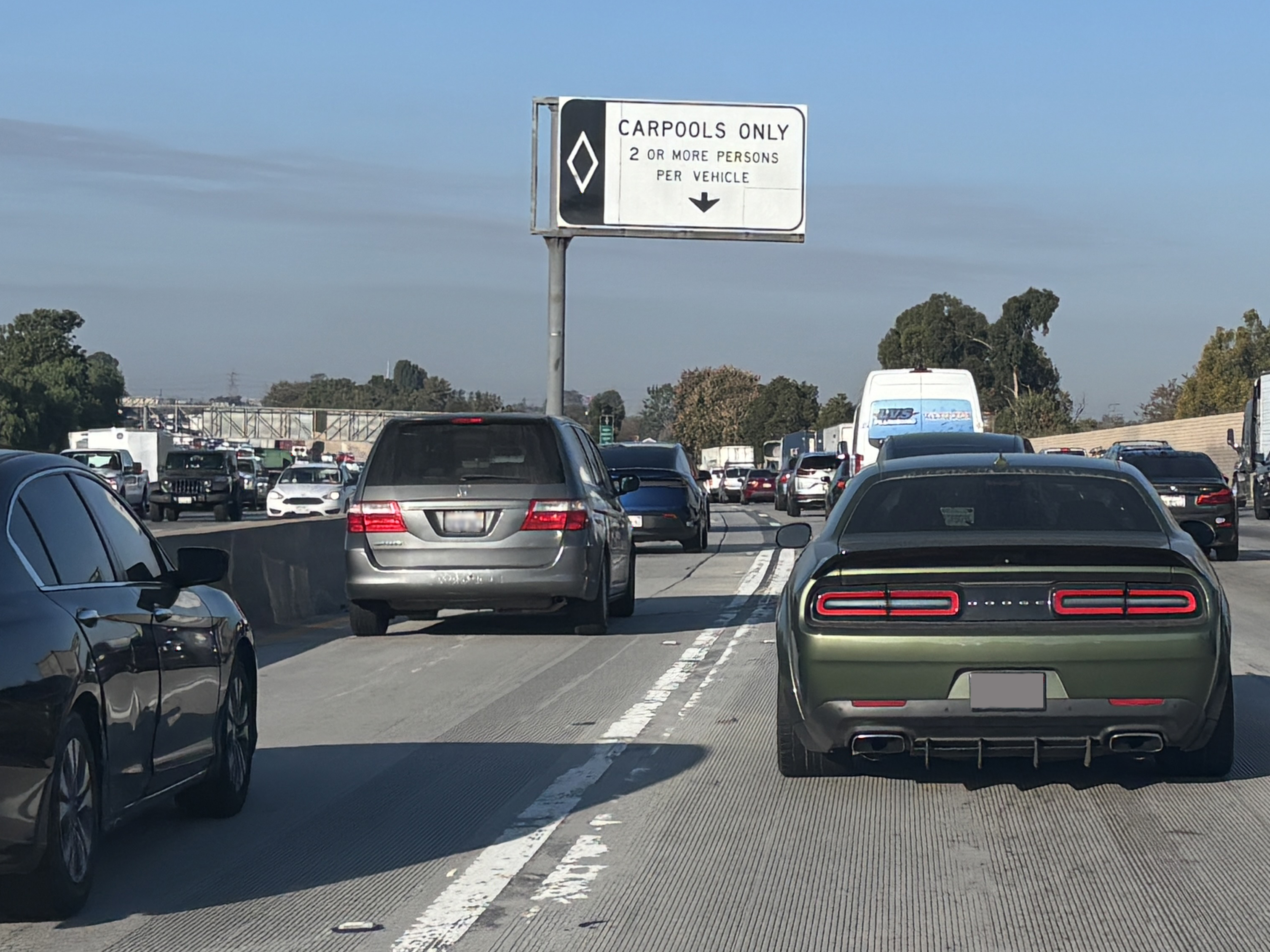
Driver in camera-view position can’t see the motorcyclist when the rider is in the left position of the carpool lane
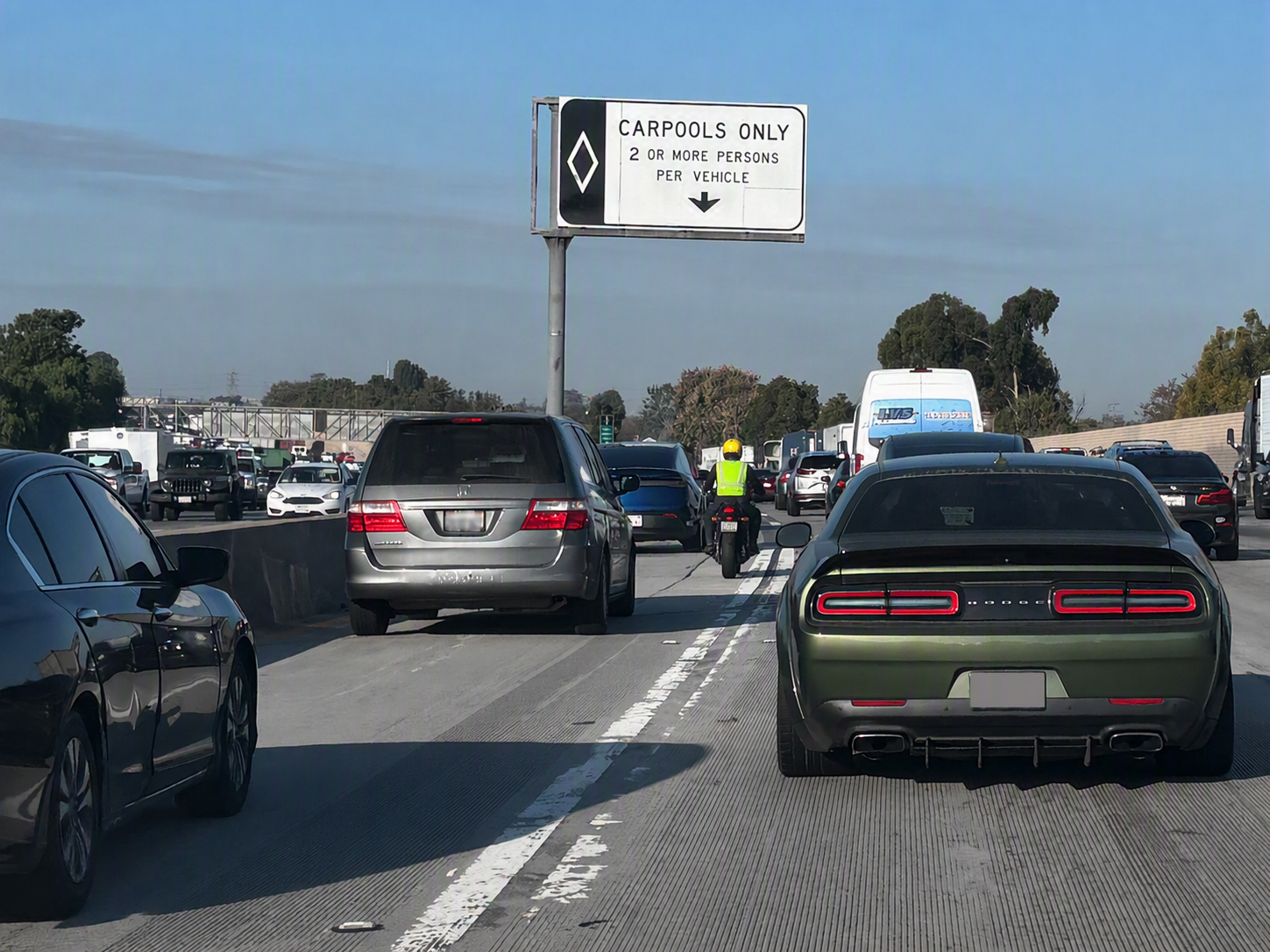
Driver in camera-view position can see the motorcyclist when the rider is in the right position of the carpool lane
There are countless situations where simply changing your lane or roadway position can make you more conspicuous to other road users. As you ride consider and practice the tactic of Positioning to be Seen by other road users so that hopefully you’ll never have a vehicle driver say, “I didn’t see you.”